Funny holidays - Snowman Day
Celebrated on 18 JanuaryModeling a snow woman is a traditional Russian pastime.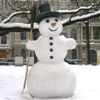 Our ancestors believed that winter natural phenomena were controlled by female spirits. To appease blizzards and blizzards, snow women were sculpted. The tradition continues today. On the streets of Russian cities and villages, with the arrival of winter, three round little men with twigs instead of arms and a carrot nose appear.
With the onset of frost, the Japanese have fun by creating Yuki Daruma from two snow globes, the prototype of which is the folk tumbler doll. Giant sculptures are sculpted by residents of Europe, the USA and Canada. In America, the snowman's accessories include a hat, a pipe and a scarf; in Romania, a necklace of garlic is hung around his neck to scare away evil spirits; in France, he is dressed in a tailcoat. In honor of the popular fun, an unusual holiday was invented - January 18 is Snowman Day.
Modeling fortresses for outdoor games and funny people is the prerogative of residents of countries familiar with winter blizzards and blizzards. The world record for creating snowmen within an hour belongs to the Japanese. In 2015, 1,406 residents of the Land of the Rising Sun managed to create 2,036 sculptures in 60 minutes. In some regions of Canada, such as Quebec, a snowman wearing a red cap with a bubo and a knitted terry belt is a symbol of the province. The good-natured little man's name is Bon. The Winter Carnival has been held annually in Quebec since 1854. The holiday, which lasts for two weeks in January, begins with the mayor symbolically presenting the keys to the provincial capital to the snowman.
Today, funny little people are an indispensable attribute of the New Year and Christmas. However, in ancient times, due to severe frosts and dank snowstorms, snowmen resembled ferocious monsters. Cold, blizzards and powder caused people a lot of trouble, so white flakes flying from the sky and sub-zero temperatures were of little joy.
Snowmen “became kinder” in the 19th century. - smiling people began to be depicted on postcards surrounded by laughing children. In Russia, this New Year's character is considered an assistant to Santa Claus. Just like the granddaughter of the main wizard - Snegurochka. The extraordinary popularity of these heroes explains why Russia has its own Snowman Day, which falls on February 26th.
The German Cornelius Graetz proposed celebrating an unusual holiday at the international level in mid-January. In 2008, he and his collection of images of snowmen were included in the Guinness Book of Records. Its collection includes more than 3,000 exhibits. The date of the holiday has a symbolic meaning. Cornelius Graetz calculated that in January there is snow in most countries, and the number “18” resembles the figure of Schneemann with a broom in his hands. This is how Snowman Day appeared - one of the most favorite winter holidays for children and adults.
Other holidays on 18 January
- Orthodox holidays - Eve of the Epiphany (Epiphany Christmas Eve)
- Holidays of the Slavs - Intra (Patron of Snakes)
- Holidays of Russia - Birthday of children's television in Russia
- Russian Holidays - Day of Breaking the Siege of Leningrad
- Russian Holidays - Day of the Russian Air Force High Command
- Funny Holidays - Day of Holiday Waiting
- According to the folk calendar - Epiphany Eve, Hungry Evening
- Funny holidays - Lighthouse Lighting Day
- Night of Raghaib among Muslims (Laylat al-Raghaib)
- Memorial Day of the Hieromartyr Theopemtos, Bishop of Nicomedia, and the Martyr Theon
- Memorial Day of Venerable Synclitia of Alexandria
- Memorial Day of Venerable Apollinaria
- Memorial Day of St. Gregory of Akrita