Memorial Day of St. Mitrophan of Constantinople
Celebrated on 17 JuneThe Orthodox Church celebrates June 17, the Day of Remembrance of St.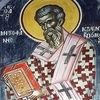 Mitrophan of Constantinople. He lived in III-IV AD, was born and lived all his life in the city of Constantinople. The future Saint Mitrophan was born and raised in those days when Constantinople was still called Byzantium. His future was predetermined from the very beginning, since his father, Saint Dometius, served as a bishop in the city, so in 316 Mitrofan himself accepted the rank of bishop. He was such a pious and meek man that the great Emperor Constantine the Great himself was amazed by his knowledge and faith in the true God.
The emperor called Saint Mitrophan with him to Rome and invited him to take the place of patriarch in the capital. He served as patriarch for about a year, after which he ruled the church for about 11 more years. Saint Mitrophan lived a long life, dying at the age of 117 years. His holy relics were placed in the temple that was built in his honor.
Orthodox Christians have many folk signs associated with St. Mitrofan's Day. The people simply called this day Dung, because the peasants believed that on this day the land fertilized with manure would give a bountiful harvest in the future.
Also on Mitrofan's holiday, it was customary to ask the natural elements to bring rain. On the eve of the holiday, peasants noticed which way the wind was blowing: if from the south - to a good harvest, from the northwest - in the second half of summer - to rain, from the east - to drought. If the wind was blowing from the wrong direction, they asked Mitrofan for the “right” wind, with which the rains would come at the right time. If there was precipitation on the day of St. Mitrofan, then such weather was established for several more days. In addition, after June 17, they began to sow buckwheat, since this crop is very sensitive to temperature. Before this, they checked whether the strawberries were starting to turn red: if the berries began to ripen, this meant that real summer warmth had set in and there would be no more cold nights.
There was also a separate series of signs that could not be done on Mitrofan’s Day: • refuse if they asked for help; • quarrel and swear with loved ones; • indulge in laziness.
In the old days they said: “At least walk on the wall to see Mitrofan, but wait until you sleep.” People believed that on this day they should work on the land as long as possible so that the harvest in the fall would be decent. Following ancient customs, this day should be spent at the dacha and be sure to fertilize the ground with fresh manure. If it rains on June 17, then this weather will continue for the next few days.
Other holidays on 17 June
- International holidays - Global Garbage Man Day
- International holidays - World Crocodile Day
- UN Holidays - World Day to Combat Desertification and Drought
- International holidays - World Karate Day
- Fun Holidays - World Tessellation Day
- Holidays in Iceland - Day of the Proclamation of the Republic of Iceland (Independence Day, Icelandic National Day)
- International holidays - World Juggling Day
- International holidays - International Surfing Day
- Holidays of Zoroastrianism - Festival of healers “Haurvat”
- According to the folk calendar - Mitrofan Navoznik
- Memorial Day of St. Methodius, Abbot of Peshnoshsky