Russian Holidays - Submariner's Day
Celebrated on 19 MarchThe submarine fleet is the most powerful means of protecting the country.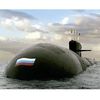 A dangerous, but at the same time, the most respected military profession is a submariner. The Navy order establishing a professional holiday for submariners was signed in 1996.
All military holidays have dates that have a historical basis. On March 19, 1906, the last Russian emperor introduced submarines into the Navy. More than a century of history has made these units an important component of the navy. Submariners became the elite. At the dawn of the history of the submarine fleet, no one could imagine the level of development of submarines in the 21st century.
The Russian Empire was one of the first to commission a new type of ship. Domestic development of underwater technology was carried out long before the official date of commissioning. The death of Peter I prevented the testing of the secret vessel. The developer was demoted, and the implementation of plans to create submarines was postponed for a long time. The next time a prototype was built in 1834. The world's first metal submarine was armed with a mine weighing 16 kg, which was attached to a pole. The behind-the-scenes struggle in the government did not allow plans to conquer the depths of the sea to be realized.
The first working copies began to appear only in the 70s of the 19th century. The country's leadership began to understand the importance of developments to create submarines. Drzewiecki's boats moved due to the muscular power of the sailors, which rotated the propeller. Fifty submarines were distributed among the fortresses, but were not used in combat.
The father of the domestic fleet supply was the marine engineer Ivan Bubnov. Under his leadership, the Dolphin submarine was developed and put into operation. The ship had a range of 240 miles and a speed of 10 knots. It was a real breakthrough. The best foreign analogues could not compete with the Dolphin. The Russo-Japanese War forces the production of submarines to accelerate. Bubnov’s team developed the projects “Killer Whale”, “Lamprey”, “Shark”.
The most successful developments were the Walrus and Bars projects. A cruising range of up to 2,500 miles, four torpedo tube tubes, eight Drzewiecki tubes, a cannon, a machine gun—Bars-class submarines are becoming a real fighting force.
By the beginning of World War I, the bulk of the submarine fleet was based in the Baltic. Successful operations showed the superiority of Russian boats over their foreign counterparts. During the war, the Baltic fleet lost twenty-four boats, but only four of them were domestic. The rest of the lost ships belonged to American and British projects given as allied assistance.
The Soviet government quickly realized the importance of the submarine fleet. The Soviet period became the basis for the development of this component of the Navy. By the beginning of World War II, there were 212 submarines and about 14 thousand personnel in service.
The Great Patriotic War became a tragic test for submariners. The complexity of combat operations was aggravated by the inability to escape in cases of damage at depth. The heroism of our submariners is described in a huge number of books and magazines, and films have been made.
23 boats received the Order of the Red Banner, 12 became Guards, 4 - Guards and Red Banner. For their accomplished feats, 20 submariners were awarded the highest award - the Hero's Star. Thousands of sailors and officers were presented with orders and medals.
The post-war history of submariners takes place in the most brutal confrontation of the Cold War. The development of nuclear energy gave impetus to the creation of nuclear submarines armed with nuclear missiles. Naval potential is being built up at a rapid pace. Educational institutions are being created that train highly professional officers in all specialties.
The difficult times of the 90s could not destroy the fleet elite. Without embellishing it at all, we can say that the officers who served performed a feat of honor, working in a time of hunger and no money. The new millennium is becoming a period of restoration of the combat effectiveness of the submarine fleet.
In modern realities, only a large, technically developed country can have a powerful high-tech submarine fleet. Currently, the Navy has nuclear and diesel-electric submarines and missile submarines on combat duty. The service of a submariner is prestigious. They have excellent health, high intelligence and good education. Only top-class specialists can operate modern submarine cruisers.
On this wonderful professional holiday, I would like to wish all officers and sailors, both active and veterans, peace, good health and quiet duty.
Other holidays on 19 March
- International holidays - International Clients Day
- Funny holidays - Professional holiday of moonshiners (Moonshiners Day)
- Funny holidays - Let's Laugh Day
- International holidays - International Day of the Master (Dia Internacional del Artesano)
- Funny holidays - International Read to Me Day! (International Read To Me! Day)
- Funny Holidays - Syringe Day
- Holidays in Finland - Equality Day (Minna Canth`s Day) (Tasa-arvon paiva, Minna Canth`s Day)
- Catholic holidays - Saint Joseph's Day
- According to the folk calendar - Constantine circles
- World Day of Social Work
- Day of honoring the icons of the Mother of God of Czestochowa, the Blessed Heaven and Shestokovskaya