Transfer of the relics of St. Job, Patriarch of Moscow and All Rus'
Celebrated on 18 AprilThe story of Job began around the 1530s, and was known to the world as John.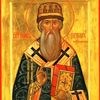 Father and mother sent their son to receive a diploma at the Staritsa monastery, where upon completion of his studies he was tonsured as a monk. While there, the boy studied the Bible better than other students and was distinguished by a good memory and determination.
When Tsar Ivan IV visited the sanctuary in 1571, noticing the capable Job, he elevated him to the leadership of the Simonov Assumption Monastery and bestowed the spiritual title of Archimandrite. After 4 years, Job became abbot of the Novospassky monastery for men, and after 6 years, Job was appointed to the episcopal rank in Kolomna, located 100 km from Moscow. After 5 years, Job was elevated to the rank of senior bishop of Rostov. In 1587 he became a metropolitan; in 1589, at the Assumption Cathedral, Job was officially consecrated as the country's first Patriarch.
While serving in the patriarchal rank, Job was engaged in the revival and strengthening of the Christian spirit among the people. He also took care of spiritual discipline in religious communities and increased their morality. The saint earned special respect for his large-scale printing and distribution of church scriptures.
When the Hours of Troubles came (1598-1613) and instability on the throne raged in the state, the self-proclaimed son of the tsar, Dmitry I, who had the support of the Polish-Lithuanian Commonwealth, came to power. Job did not accept the newly created impostor; on the contrary, he brought censure against him and the citizens who supported him, for which he paid with his personal title. The saint was imprisoned in the Staritsa monastery, and Ignatius, originally from Greece, was appointed to his post.
After the death of the impostor sovereign, the ruling power announced that the overthrow of Job was considered illegal, and he was again in his former rank. However, the monk was unable to return due to his old age and poor health. The elder lived out his last days in the Staritsky Monastery, where in 1607 he gave up his soul to the Lord. The date of his repose was recorded as June 19.
The monk was buried in the same sanctuary, and a chapel was founded above the burial place. The transfer of the holy relics to the capital's Assumption Cathedral happened in 1652. Subsequently, pilgrims flocked to the relics of the saint, noting their miraculous powers.
Other holidays on 18 April
- International holidays - International Day of Monuments and Historic Sites
- International holidays - World Amateur Radio Day
- Russian Military Glory Day - Battle of the Ice (1242)
- Funny holidays - International Juggler's Day
- Fun Holidays - Pet Owners Independence Day
- Holidays of Ukraine - Foundation Day of the Red Cross Society in Ukraine
- Danish Holidays - Battle of Dybbol Day
- Remembrance Day of the Hung Kings in Vietnam (Gio To Hung Vuong)
- Zimbabwe Holidays - Independence Day
- According to the folk calendar - Fedul Vetrenik
- Day of Remembrance of the Holy Martyrs Agathopodus the Deacon and Theodulus the Reader
- Memorial Day of St. Puplius of Egypt
- Memorial Day of St. Theodora of Thessalonica