International Gingerbread Day
Celebrated on 21 AprilApril 21 is celebrated as International Gingerbread Day.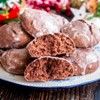 This holiday, which falls into the fun category, will certainly delight those with a sweet tooth. Gingerbread is a flour confectionery product made from a special dough. It is usually mixed with honey, although today regular sugar syrup is increasingly used. Eggs, various spices and seasonings, chopped nuts, chopped candied fruits, dried fruits or liquid fillers are often added to the dough. There are two ways to prepare gingerbread - the more ancient custard and raw. This dessert is very popular in many countries and gingerbread has a very rich history.
Today gingerbread is considered a traditional Russian dessert, although in fact the first mentions of similar pastries are found in Egyptian and Roman writings. The Romans called them "panus mellitus". These were cakes with honey, the dough for which was also mixed with honey. The ancient Egyptians baked honey bread, which can also be considered the first gingerbread.
Many centuries later, the Germans began to make “lebkuchen” - today this is the name for special gingerbread cookies that are baked especially for Christmas. In general, many Europeans associate this dessert with holidays. In the UK, curly gingerbread cookies in the shape of men, hearts, stars, Christmas trees, and houses are baked for Christmas.
In Belgium they bake very soft and airy desserts that are more like cupcakes. In a number of European countries, and later in the United States, gingerbread houses and men are considered symbols of Christmas. They are generously decorated with powders, drawings and patterns are applied with fondant or glaze. The gingerbread house featured in the famous Brothers Grimm fairy tale Hansel and Gretel. The gingerbread man also became the hero of an English fairy tale called “Gingerbread Man”. Its plot completely copies the story of Kolobok's adventures with a tragic ending.
Previously, each Russian province had its own special recipes for preparing this delicacy. One of the most famous gingerbreads in Russia is Tula. Gingerbread boards were previously used to make this dessert. Ready-made gingerbread cookies were called printed ones, but in addition to them, there were also cut-out and molded desserts. To make printed gingerbread cookies, it was necessary to stock up on special boards in advance, the thickness of which was about 5 cm.
Craftsmen carved them from hard wood. The wood commonly used was pear, alder, maple, and birch. The workpieces had to be thoroughly dried in natural conditions, but not under the sun. The drying process could take from 5 to 20 years, but the time investment was justified because the finished board could be used for up to 70 years. Periodically it had to be boiled in oil to completely remove any remaining dough.
When the workpiece dried and was considered suitable for further processing, it fell into the hands of carvers, who applied patterns and drawings in a mirror image to its surface. In Russia, gingerbread making became a real folk craft by the middle of the 17th century. Its heyday occurred at the end of the 18th and beginning of the 19th centuries. Perhaps the most original gingerbread was made for the coronation of Nicholas II. The dessert was decorated with the profile of the monarch, recreated by craftsmen with incredible accuracy. The form specially prepared for it was used only once.
Tula rightfully received the unofficial status of the “capital of gingerbread”. Anyone who comes to this city is sure to take with them a gift - a recognizable dessert covered with fondant. In addition to Tula, the gingerbread business flourished in Vyazma, Tver, Vologda, Arkhangelsk, and Gorodets. Secret recipes were passed down in families from generation to generation. One of the most famous “gingerbread” dynasties was the Tula Grechikhina people. Vasily Romanovich Grechikhin in 1887 took part in an exhibition that was held in France. For his two-pound (more than 30 kg) gingerbread, he was awarded a gold medal. At home in Russia, Grechikhin was given the title of honorary resident of Tula.
Other holidays on 21 April
- Russian Holidays - Local Government Day
- Russian holidays - Day of the Chief Accountant (Chief Accountant)
- Science Day in the USSR
- UN Holidays - World Creativity and Innovation Day
- Holidays of Kazakhstan - Day of the State Security Service of the Republic of Kazakhstan
- Fun Holidays - World Curlew Day
- Russian Holidays - Day of the Creation of the Far East Naval Forces
- Brazil Holidays - Tiradentes Day
- According to the folk calendar - Rodion Icebreaker
- Baha'i Holidays - First day of the Ridwan festival
- Mahavir Jayanti in India
- Annual London Marathon (Virgin London Marathon)
- Memorial Day of the Holy Apostle Hermas of Dalmatia from the age of 70
- Memorial Day of St. Rodion
- Feast of the Spanish Icon of the Mother of God “Virgin on the Throne”
- Feast of the Icon of the Mother of God “St. George”