International holidays - Galileo Galilei Day
Celebrated on 15 FebruaryPhysics as a science appeared thanks to the Italian scientist Galileo Galilei.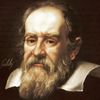 The outstanding astronomer was the first to use a telescope to study celestial bodies. The “father of observational astronomy” confirmed the presence of phases on Venus, discovered the rings of Saturn, mountains on the Moon and four satellites of Jupiter, and explored sunspots. The scientist who laid the foundation of classical physics was born on February 15, 1564 and lived a long life, full of events and scientific discoveries.
Galileo's ideological inspiration was Copernicus, who argued that the Earth was not the center of the solar system. These statements led to a conflict between the scientist and the Catholic Church. The persecution of the Inquisition did not force the astronomer to abandon his views. In honor of the great physicist, mathematician and philosopher, Galileo Galilei Day was established, which is celebrated on February 15.
The future astronomer devoted his youth to medicine; he also attended lectures on geometry at the University of Pisa. Having studied the works of Archimedes and Euclid, Galileo discovered the law of isochronism - the independence of the period of oscillation of a pendulum from the swing of oscillations and the mass of the load, and invented hydrostatic scales for weighing precious metals. In physics, he established the principles of relativity for rectilinear uniform motion and constancy of acceleration.
Galileo studied the issues of physical optics, exploring the nature of color and light. An important contribution to the development of astronomy was the challenge by scientists of the Ptolemaic system of the world, according to which the Earth was at its center.
In the poem “Career” by Yevgeny Yevtushenko there are the following lines:
The life of the Italian physicist, astronomer and engineer did not end as tragically as that of Giordano Bruno, who was burned at the stake. But Galileo also suffered from the actions of the Inquisition, which set fire to his treatise “Dialogue on the Two Chief Systems of the World,” written in 1632. In it, the astronomer substantiates the correctness of the teachings of Copernicus: the Sun is indeed the celestial body around which the Earth and other planets revolve.
In 1633, the church forced Galileo to renounce his views on his knees. There is a legend that after the court verdict, the scientist triumphantly called out: “And yet she is spinning!” Because of his scientific views on the structure of the Universe, Galileo was sentenced to lifelong house arrest after his imprisonment. The astronomer died at the age of 78 and was buried without honors or a tombstone in the village of Arceti near Florence.
It took more than 350 years for Galileo Galilei to be cleared of the Inquisition's charges. In 1992, John Paul II, after the careful work of a commission from the Vatican, recognized the fidelity of the heliocentric system of the world. The Pope made an official apology on behalf of the church and rehabilitated the great astronomer of the past.
Other holidays on 15 February
- Day of Remembrance of Russians who performed their official duties outside the Fatherland
- Funny Holidays - Love Reset Day
- International Childhood Cancer Day
- International holidays - International Operating Nurse Day
- Funny holidays - Day of tying knots for luck
- Holidays of Russia - Day of the Government Communications Troops
- Holidays in Serbia - Statehood Day (Day of the First Serbian Uprising)
- Holidays of the Slavs - Gromnitsa
- Fun Holidays - Singles Awareness Day
- Global Information Governance Day
- World Anthropology Day
- Holidays of Belarus - Day of Remembrance of Internationalist Soldiers
- Holidays of Ukraine - Day of Honoring Participants in Combat Actions on the Territory of Other States
- Canadian Holidays - National Flag of Canada Day
- According to the folk calendar - Gromnitsy (Candlemas of the Lord)
- Berlin International Film Festival "Berlinale"
- Presentation of the Lord
- World Orthodox Youth Day